

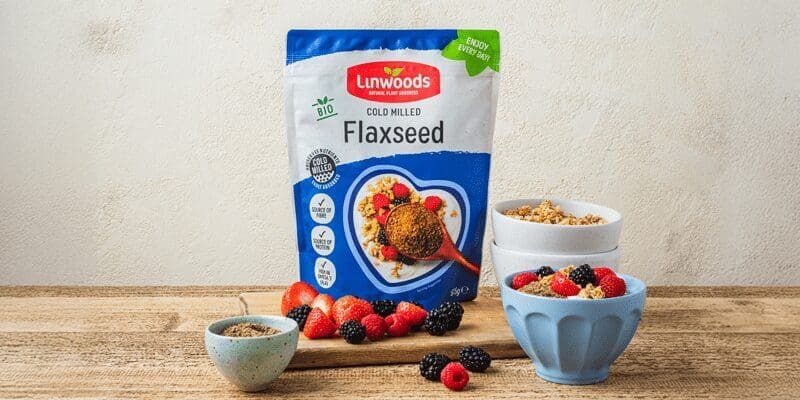
High fibre foods are one of the easiest ways to improve digestion and reach the recommended 30g of fibre per day.
Fibre has found itself in vogue of late, but even still most people in the UK & Ireland are lacking in their intake. At Linwoods, we have been singing the benefits of fibre for years and believe small changes every day can make reaching the recommended 30g a day target easier to achieve easily achievable.
This guide explores a range of high fibre foods that can help increase daily fibre intake, including oats, apples, wholegrains, potatoes with skin, flaxseed, lentils, chickpeas, chia seeds, green peas and berries. It also explains the difference between soluble and insoluble fibre and how both contribute to digestive health. By adding more high fibre foods to everyday meals, it becomes easier to improve fibre intake through simple dietary changes.
Why Fibre Matters
Fibre is a hero in the diet, it doesn’t get digested like other nutrients, but it plays a huge role in keeping things running smoothly. One of its most important jobs is supporting comfortable, regular digestion. In fact, eating enough fibre helps keep stools soft and easier to pass, which is why it’s often recommended for preventing constipation.
Types of fibre
Fibre is typically broken down into two groups:
Soluble Fibre
Soluble fibre is the type of fibre that dissolves in water to form a gel-like material that slows digestion and helps soften stools.
Insoluble Fibre
Insoluble fibre is the type of fibre that does not dissolve in water and passes through the gut intact, adding bulk to stool and supporting regular bowel movements.
We go into more detail on Soluble vs Insoluble Fibre with Nutritionist Jane McClenaghan in her guest article. For a full breakdown on the benefits of fibre and a thorough explanation of types of fibre, including prebiotics visit our What is Fibre? complete guide.
11 High Fibre Foods
A short list of high fibre foods that will help you reach your fibre goals. Simple changes can improve your fibre intake without missing out on your favourite foods.
If you’re looking for broader strategies beyond food choices, explore our guide to easy ways to increase fibre intake
Oats
Oats are a wholegrain food commonly enjoyed at breakfast and known for their naturally mild flavour. These are a great way to start the day as they have slow releasing energy and are a great fibre source.
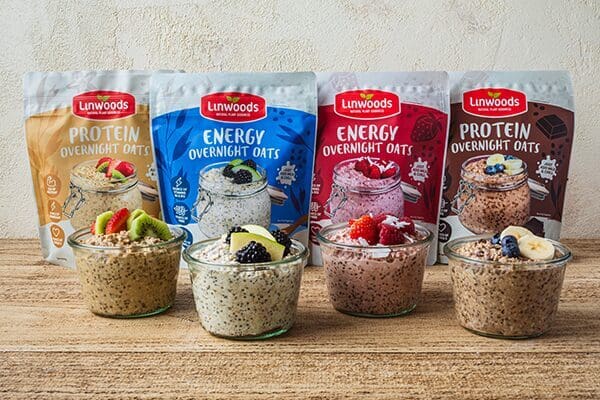
Here at Linwoods we love Overnight Oats! We love them so much we made a healthy, delicious & convenient range of them. They also include chia seeds for an extra fibre hit.
Add oats your breakfast easily with Overnight Oats. Why not top yoghurt, smoothies or use in baking for an easy fibre boost.
Fibre Content
Oats provide approximately 7.5 -10g of fibre per 100g, contributing roughly 25–33% of the recommended 30g daily intake. Most of this comes from soluble beta glucan, which can help support digestion, heart health, and steady energy release.
Healthy pairing idea: Pair oats with berries for added antioxidants and extra insoluble fibre or stir in Linwoods Milled Flaxseed to boost both soluble and insoluble fibre and Omega 3 (ALA).
Apples
Apples are a widely eaten fruit valued for their natural sweetness and crisp texture. They make a delicious & convenient snack as well an excellent topping for Overnight Oats to increase the overall fibre of that dish.
Eat an unpeeled apple for max fibre, alternatively slice apples into breakfasts, pair with nut butter for a snack, or chop them into salads for a fibre kick.
Fibre content
A medium apple with skin provides around 2.4 – 5.7g of fibre, depending on variety and measurement method. Apples provide a source of both soluble and insoluble fibre, with the skin providing most of the insoluble fibre which adds bulk to stool and supports regular bowel movements.
Slice apples and pair with nut butter or sprinkle with chia seeds for a high fibre snack.
Wholegrains
Wholegrain bread is a staple food made from wholegrains that retain their bran and germ, preserving natural fibre and nutrients. Unlike refined white alternatives which have the bran and germ removed during processing.
Wholegrain bread provides a wide range of fibre and minerals as opposed to white bread which contains less fibre. Similarly, whole grain pasta has around 3 times the amount of fibre as white pasta, 5-7g to 2-3g respectively.
Swap white bread for wholegrain versions in sandwiches, toast or wraps to increase fibre effortlessly. Instead of using white pasta in bolognese you can switch to wholegrain varieties for a higher-fibre option.
Fibre Content
Wholegrain bread is a simple, everyday way to boost fibre intake because it retains the bran and germ, the parts of the grain richest in fibre, vitamins and minerals. A typical slice delivers 2–4g of fibre, giving you providing around 7 – 13% of your recommended 30g per day. Seeded loaves often provide slightly more, thanks to added fibre from seeds.
Healthy pairing idea: Enjoy wholegrain toast topped with avocado, hummus, or Linwoods Milled Flaxseed for a creamy, nutrient‑dense, high‑fibre option.
Potatoes (with skin)
Potatoes are a familiar and versatile carbohydrate source, most of the fibre is insoluble which is contained in the skin.
To quote JRR Tolkien’s potato expert, Samwise Gamgee, ‘Po-tay-toes! Boil ’em, mash ’em, stick ’em in a stew.’ Potatoes are extremely versatile, but their benefits tend to wane whenever fried or the skin is removed.
Fibre Content
Potatoes are naturally rich in fibre, but only when the skin stays on. A medium baked potato with its jacket provides roughly 5g of fibre, contributing about 16% of your daily target. The skin contains insoluble fibre that supports comfortable digestion and adds bulk to stools.
Healthy pairing idea: Serve skin on potatoes alongside peas, broccoli, or a dollop of Greek yoghurt mixed with flaxseed for a filling, fibre balanced plate.
Flaxseed
Flaxseed, also known as linseed, is sourced from the flax plant and is one of nature’s richest plant sources of Omega 3. The plant itself is cultivated for its seeds as well as its fibre. The tiny super seed that’s been around for generations.
The original milled flaxseed blend is a versatile product that is popular for maintaining normal blood cholesterol levels and for its high source of fibre and plant based protein. It’s also 100% Organic, Gluten Free & Vegan. Of course these our one of our favourite high fibre foods.
Fibre content
Flaxseed is considered high in fibre with 20g of fibre per 100g. We recommend 20g of Flaxseed per day providing around 4.1g of fibre.
Lentils
Lentils are small, quick cooking legumes. They are perfect as meat replacements for curries, bolognese and add extra fibre to meals you will already be enjoying.
Easily add lentils to soups, stews, curries, salads or pasta sauces. They are a great meat replacement in vegan and vegetarian recipes! We like including them in bolognese.
Fibre Content
Lentils are one of the most efficient fibre sources. They are affordable, versatile, and rich in plant protein. Cooked lentils contain around 8g of fibre per 100g, providing 26% of your daily needs in a modest portion. They also deliver essential vitamins and minerals like iron and folate.
Healthy pairing idea: Stir cooked lentils into bolognese, curries, or soups, or mix with wholegrain pasta to create a warm, hearty, high‑fibre comfort meal.
Chickpeas & Beans
Chickpeas and beans are nutrient dense pulses used in many dishes. They are extremely versatile and can be added to curries, salads, sandwiches or any main meal. Easily improve the taste with spices and flavourings.
Add beans to stews, curries and salads, or blend chickpeas into hummus.
Fibre Content
Chickpeas and beans supply both soluble and insoluble fibre, making them excellent for digestion and gut health. Cooked chickpeas offer 7–8g of fibre per 100g, about 23–26% of your daily intake. Other beans often provide similar or higher levels.
Healthy pairing idea: Toss chickpeas into salads, stir them into curries, or blend into hummus and serve with carrot sticks for a naturally high‑fibre snack.
Chia Seeds
When it comes to high fibre foods, Chia Seeds stand-out. Chia seeds are tiny, but mighty, seed that swell when soaked in liquid.
Sprinkle chia onto yoghurt, porridge or smoothies, or make chia pudding by soaking overnight. You can also add to overnight oats for added fibre.
Fibre content
Chia seeds are one of the richest natural fibre sources available. Our Chia Seeds are 28g of fibre per 100g. Just 2 dessertspoonful’s provide 5.7g and 19% of your daily goal. Chia seeds provide a mix of both soluble and insoluble fibre, with majority being insoluble which adds bulk to stools and promotes regular bowel movements.
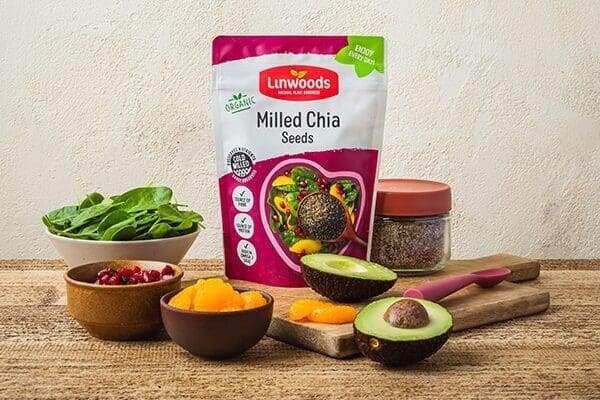
Healthy pairing idea: Add chia seeds to overnight oats, smoothies, or yoghurt bowls, or use them to make chia pudding for a satisfying, fibre‑dense breakfast.
Green Peas
Green peas are sweet, mild legumes found in many household meals. They can be easily added to any meal or can act as a delicious side dish.
Combine with other high fibre foods & add peas to pasta dishes, curries, stir-fries, soups or blend into dips.
Fibre content
Green peas are a convenient, budget‑friendly fibre source offering 5–6g of fibre per 100g, giving you 17–20% of your daily intake along with plant‑based protein, vitamin C and antioxidants.
Healthy pairing idea: Add peas to pasta dishes, risottos, stir‑fries or blend into a creamy pea‑mint dip for a fresh, vibrant, high‑fibre side.
Berries
Berries are soft, colourful fruits with natural sweetness. Our favourite way to add them to a meal is to mix them through natural Greek yogurt to add extra flavour and nutrition. They are deliciously sweet way to add more high fibre foods to your diet
Add berries to yoghurt, porridge, smoothies or enjoy as a snack or dessert topping.
Fibre contents
Berries are naturally high in fibre and antioxidants, making them ideal for gut health and overall wellness. Raspberries and blackberries deliver 5–7g of fibre per 100g (about 17–23% of daily needs), while strawberries and blueberries offer gentler amounts at 2–2.4g.
Healthy pairing idea: Mix berries through Greek yoghurt, scatter over porridge, or blend into smoothies for a refreshing, fibre‑forward meal or snack.
Psyllium Husk
Psyllium is a powdered husk commonly used as a fibre supplement, it is mainly cultivated in India and is the key ingredient in many dietary aid products. It is a go-to if you are looking for high fibre foods. It can be easily added to most meals.
Fibre contents
Psyllium husk powder is a concentrated soluble fibre that forms a gel, helping soften stools and support regularity. With 70% soluble fibre per 100g, just one teaspoon is 4g fibre per 5g serving) delivers around 15–17% of your daily fibre target.
Healthy pairing idea: Mix psyllium into smoothies, swirl through porridge, or stir into yoghurt, ensuring you drink plenty of water to help it work effectively. Pair with other high fibre foods such as Flaxseed or Chia Seeds in overnight oats.
Summary
Including more high fibre foods in everyday meals is one of the simplest ways to support digestion and help reach the recommended 30g of fibre per day. Foods such as oats, apples, wholegrains, lentils, chickpeas, chia seeds, flaxseed and berries all contribute valuable dietary fibre and can be easily added to breakfasts, snacks and main meals. By choosing a variety of high fibre foods and making small changes to everyday eating habits, it becomes much easier to increase fibre intake naturally and support long-term digestive and overall health.
High Fibre Foods FAQ
What are high fibre foods?
High fibre foods are foods that naturally contain dietary fibre and can help support digestion. Many everyday plant foods contain fibre, including wholegrains, fruits, vegetables, legumes and seeds. Examples include oats, apples, wholegrain bread and pasta, potatoes with the skin, lentils, chickpeas, beans, chia seeds, flaxseed, green peas and berries. Including a variety of these foods in everyday meals can help increase overall fibre intake.
How much fibre should you eat per day?
The recommended daily fibre intake is around 30g per day. Despite growing awareness of fibre, many people in the UK and Ireland still do not consume enough. Increasing fibre intake through everyday foods such as wholegrains, fruits, vegetables, legumes and seeds can help make it easier to reach this daily target. To easily hit this target ensure you are eating plenty of high fibre foods.
Why is fibre important?
Fibre plays an important role in the diet because it helps support comfortable, regular digestion. Unlike other nutrients, fibre is not digested by the body but instead helps keep the digestive system moving smoothly. Eating enough fibre helps keep stools soft and easier to pass, which is why it is often recommended to help prevent constipation.
What are the two types of fibre?
There are two main types of fibre found in foods: soluble fibre and insoluble fibre. Soluble fibre dissolves in water to form a gel-like substance that slows digestion and helps soften stools. Insoluble fibre does not dissolve in water and passes through the digestive system largely intact, adding bulk to stool and helping support regular bowel movements.
Are oats high in fibre?
Oats are a wholegrain food commonly eaten at breakfast and are a good source of fibre. They provide around 7.5-10g of fibre per 100g, contributing roughly 25-33% of the recommended daily intake. Much of the fibre in oats comes from soluble beta-glucan.
Do apples contain fibre?
Apples contain both soluble and insoluble fibre. A medium apple with the skin provides around 2.4–5.7g of fibre, depending on the variety and measurement method. Much of the insoluble fibre is found in the skin, which adds bulk to stool and supports regular bowel movements.
Are lentils high in fibre?
Lentils are a high fibre legume and are commonly used in soups, stews, curries and pasta sauces. Cooked lentils contain around 8g of fibre per 100g, providing a significant contribution towards the recommended daily fibre intake.
Are chia seeds high in fibre?
Chia seeds are one of the richest natural sources of fibre. They contain around 28g of fibre per 100g, and just two dessert spoonfuls provide about 5.7g of fibre, which is around 19% of the daily fibre goal.
What foods naturally contain fibre?
Many everyday foods naturally contain fibre. Wholegrain foods such as oats, wholegrain bread and wholegrain pasta are good sources, while fruits such as apples and berries also contribute fibre. Legumes including lentils, chickpeas, beans and green peas are fibre-rich foods, and seeds such as chia seeds and flaxseed provide concentrated sources of fibre. Potatoes eaten with the skin and psyllium husk are also sources of dietary fibre.
What are simple ways to eat more high fibre foods?
Increasing fibre intake can be achieved through small changes to everyday meals. Choosing wholegrain bread instead of white bread, adding seeds such as chia or flaxseed to yoghurt or porridge, including lentils or beans in soups and sauces, eating apples with the skin and cooking potatoes with the skin on are simple ways to add more fibre to the diet.
Is flaxseed high in fibre?
Flaxseed, also known as linseed, is considered a high fibre food. It contains around 20g of fibre per 100g, making it a concentrated plant source of dietary fibre. A recommended serving of 20g of flaxseed provides approximately 4.1g of fibre, contributing towards the recommended daily intake of 30g. Flaxseed can be easily added to foods such as yoghurt, smoothies, porridge or breakfast dishes to help increase overall fibre intake.



 No products in the cart.