

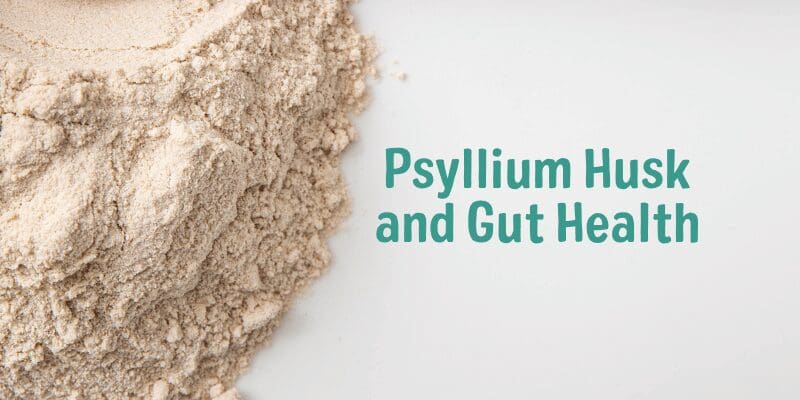
Most of us know that fibre is important. Yet the vast majority of people are still not eating enough of it. That matters, because fibre plays a central role in digestive health, bowel regularity and the health of the gut microbiome.
Exploring Psyllium Husk and Gut Health
As a gut health doctor, I have been recommending psyllium husk powder to patients for years, as it is one of the best-studied forms of soluble fibre, with good evidence for supporting bowel regularity and helping some people with constipation.
Psyllium is a type of soluble fibre that comes from the husks of the seeds of the Plantago ovata plant. When mixed with water, it forms a gel-like substance. This gel-forming property is one of the reasons psyllium has been used for many years to support bowel regularity.
Psyllium is relatively gentle and tends to hold water in the stool. This can help soften hard stools, add bulk and make bowel movements easier to pass. For people who experience occasional constipation, increasing fibre gradually, alongside adequate fluid intake, is often an important part of first-line dietary advice.
What is relationship between psyllium husk and gut health?
The evidence is strongest for psyllium’s role in improving constipation and bowel regularity. Benefits may be more likely with regular use over several weeks, although individual responses vary .Psyllium may also be helpful for some people with irritable bowel syndrome, particularly when constipation or irregular bowel habits are part of the picture. In a large randomised trial in primary care, soluble fibre in the form of psyllium improved symptoms in people with IBS, while insoluble bran did not show the same benefit.
This distinction matters. Fibre is not a single thing. Different types of fibre behave differently in the gut. Some are soluble, some are insoluble; some are highly fermentable, while others are more gel-forming and less rapidly fermented. Psyllium’s particular structure means it can increase stool water content and bulk without being as gas-producing as some other fibres. That is one reason it can be a practical option for people who are beginning to increase fibre intake.
Psyllium Husks role in your diet
Psyllium should not be seen as a replacement for a healthy, fibre-rich diet. The long-term goal should still be to eat more fibre from a variety of plant foods, including beans, lentils, wholegrains, vegetables, fruits, nuts and seeds.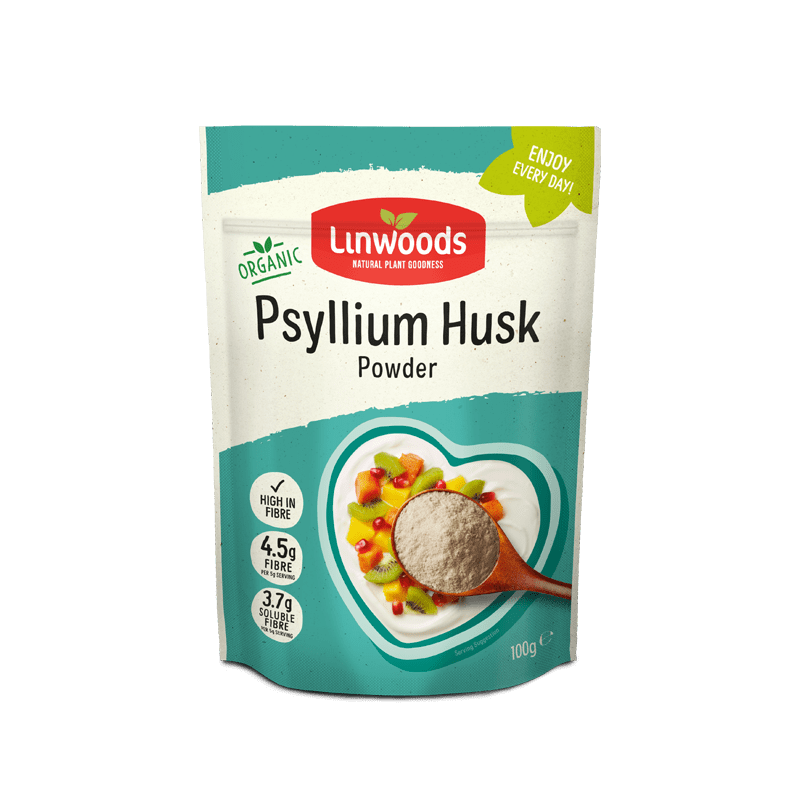 These foods provide not only fibre, but also polyphenols, minerals and other nutrients that help support a diverse and resilient gut microbiome.
Even without constipation or other gut health problems, many people may benefit from increasing their fibre intake. For anyone beginning the move towards a higher-fibre diet, or needing an extra fibre top-up on busy days when food prep takes a back seat, psyllium can be a helpful go-to.
How much fibre is in psyllium husk?
One 5g serving of Linwoods Psyllium Husk powder provides 4.5g of fibre, making it a simple way to increase fibre intake in a measured and consistent way. It can be stirred into a large glass of water, added to porridge, blended into a smoothie or mixed into recipes.
My advice is always to start low and go slow, especiall if your current fibre intake is low. A sudden jump in fibre intake can cause bloating, cramping or excess gas, particularly if your gut is not used to it. If one 5g serving causes issues, begin with a smaller amount, increase gradually, and always take psyllium with plenty of fluid. Because psyllium absorbs water and thickens, it should not be taken dry.
What tips would you give to improve gut health?
For most people, improving gut health is not about chasing the latest “superfood”. It is about building simple daily habits that are easy to repeat. Eating more plants, drinking enough fluid, moving regularly and increasing fibre intake are all practical steps that can make a real difference over time.
Psyllium husk powder is a well-studied, plant-based source of soluble fibre. Used sensibly, it can be a useful tool for supporting bowel regularity and helping people take that first step towards a more fibre-rich diet.
About the Author

References
- van der Schoot et al., 2022 (Am J Clin Nutr) — fiber supplementation for chronic constipation meta-analysis
https://doi.org/10.1093/ajcn/nqac184 - Bijkerk et al., 2009 (BMJ) — soluble vs insoluble fibre in IBS RCT
https://doi.org/10.1136/bmj.b3154 - Dimidi et al., 2025 (Neurogastroenterol Motil) — BDA Guidelines for Dietary Management of Chronic Constipation
https://doi.org/10.1111/nmo.70173 - Chang et al., 2023 (Gastroenterology) — AGA/ACG Guideline on Pharmacological Management of Chronic Idiopathic Constipation
https://doi.org/10.1053/j.gastro.2023.03.214


 No products in the cart.