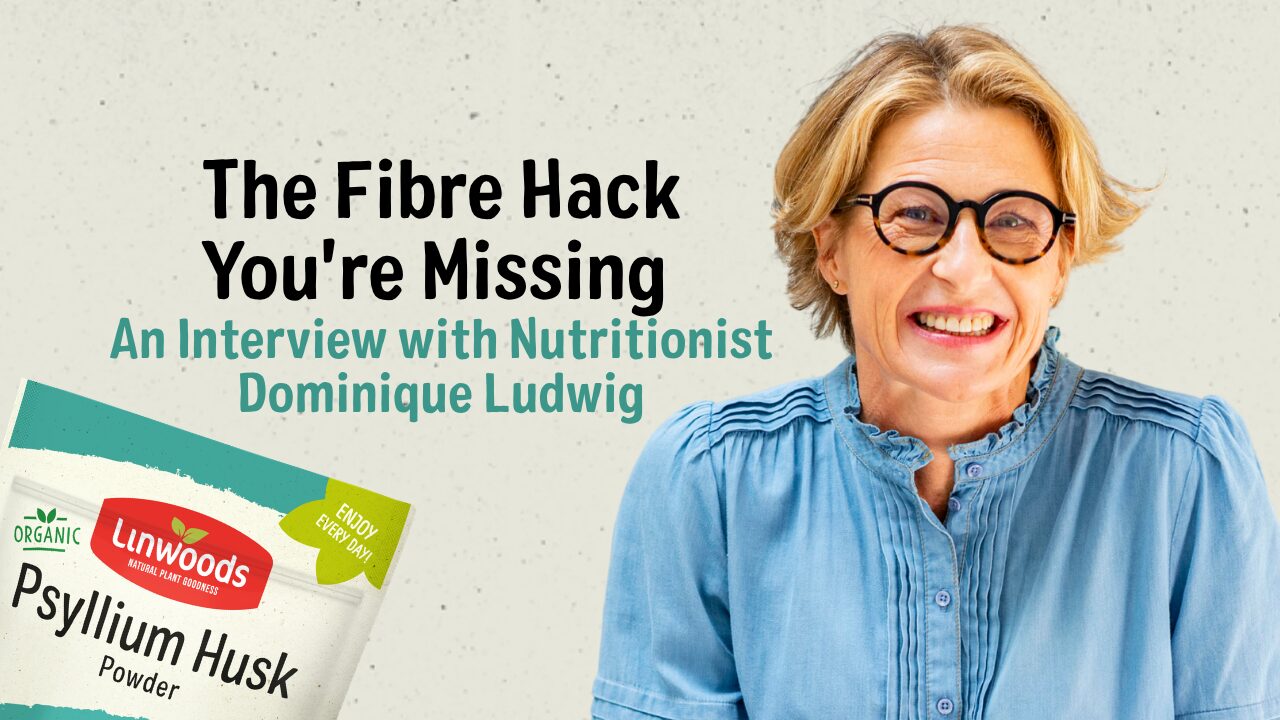
Today I’m going to be answering questions on fibre, why it’s important in the diet, and also on the benefits of psyllium husk, which is a type of fibre. My name is Dominique Ludwig, and I’m a nutritionist, and here are some common questions I get asked about fibre.
What is fibre?
Fibre is a type of carbohydrate. That means it’s made up of long chains of glucose molecules, but unlike other carbohydrates in the diet, we’re unable to digest fibre because we lack the necessary enzymes. So fibre in itself gives the structure, strength and stability to plants, to help them grow upright and stop them from falling over.
Interview With Dominique Ludwig
It’s been estimated that around 96% of us are still not eating enough fibre in our diet, but increasing fibre in the diet is one of the most important things we can do to improve our health.
There are three main types of fibre. Insoluble fibre, which doesn’t dissolve in water and passes through the digestive tract undigested, think of it like the husk on your beans and lentils, the bran on your wheat, or the skin on your tomatoes or potatoes.
Soluble fibre can dissolve in water to form a viscous gel. It’s the type of fibre you get in beans and lentils, oats, fruits and vegetables, and also nuts and seeds, particularly chia and flax seeds. It’s also a key component in psyllium husk.
The third type of fibre is called resistant starches. These are found in abundance in green bananas, but they also form in foods that have been cooked and cooled, things like pasta, rice, potatoes, but also bread, beans and lentils. When foods are cooked and then cooled at low temperatures, some but not all of that starch is converted into resistant starch, which is resistant to our digestion but becomes food to the microbes living in our guts.
Why is fibre good for us?
Although fibre isn’t classed as an essential nutrient in the same way as vitamins or minerals, it’s still essential for our health. Research consistently shows that people who eat more fibre have better health outcomes and lower risk of chronic disease than those who eat very little fibre.
High fibre is associated with improved cardiovascular health, gut health, immune function, brain health, and even reducing the risk of certain cancers. This is largely because it plays a central role in shaping the health of our microbiome.
Fibre has a mechanical effect on our digestion, but it also has an indirect benefit via the interaction between fibre and our gut microbiome. Apart from keeping our gut moving, fibre can also bind to compounds in the body that have already been packed up by the liver ready for excretion. It’s part of how fibre helps to lower LDL cholesterol, and also it’s thought to support healthy oestrogen clearance as part of our broader hormone metabolism.
Our gut bugs ferment fibre to produce bioactive compounds that support our body in a number of ways. One of the main groups of bioactive compounds is called short chain fatty acids. These act as a food source to the cells lining the gut, which help to control what we absorb and what stays in the gut. The cells lining our gut have a particularly fast turnover and are constantly being replenished and regenerated.
Short chain fatty acids also have a broader anti-inflammatory effect on the body, helping to reduce systemic inflammation. But when we’re increasing plants in the diet for fibre, we’re also increasing our intake of vitamins, minerals, and also healthy plant compounds like polyphenols.
How does fibre support digestion?
Fibre adds bulk to the food passing through our gut. This helps to move the food through the gut more efficiently. It can absorb water, making our stool softer and easier to pass. The bulky nature of fibre adds volume and traps water. This puts pressure on the intestinal wall, which can help to improve that peristalsis. It also keeps the gut wall toned and gives the muscles a bit of a workout.
Soluble fibre forms a viscous gel. It can slow down gastric emptying, which helps keep us fuller for longer, reducing food noise, and can support healthy weight management. It can also slow down the speed that we absorb glucose from our food. This can have a stabilising effect on our blood glucose and can also help to regulate our appetite and energy levels. Foods like psyllium husk, that are made up of 70% soluble fibre, do this particularly well.
So fibre is important in helping to reduce constipation and help us to remove waste from the body, but it can also be helpful for symptoms of diarrhoea, because soluble fibre absorbs the water, making the stool more solid. This means that soluble fibre and insoluble fibre are really important for our digestive health.
What are the benefits of psyllium husk?
Psyllium husk is the fibrous outer seed coating from the Plantago ovata shrub. It’s uniquely rich in fibre, containing around 90 grams of fibre per hundred grams. Of this, around 30% is made of insoluble fibre and 70% is soluble. It’s well tolerated by most people, and has been shown in clinical research to improve the consistency of stools, making them easier to pass and reducing the risk of constipation.
We want to get most of our fibre from natural whole foods in the diet, but psyllium husk can be a helpful addition for people who struggle with high fibre foods, or people that struggle with constipation or diarrhoea. Psyllium husk comes in the form of flakes or powder, products like Linwoods Psyllium Husk Powder are slightly easier to dissolve in water and easier to use in the kitchen.
Because psyllium husk is such a rich source of fibre, it can also help to keep us fuller for longer, blunting cravings, and also help support our natural appetite signalling. It can also be useful in stabilising our blood glucose levels and supporting motility, when it’s well hydrated.
If we increase fibre without drinking water, we can actually make constipation worse and not better. It’s really important that we drink more water when we’re increasing fibre, especially psyllium husk, in the diet.
How can I use psyllium husk?
Psyllium husk has really gained popularity in recent years, because it’s got some really interesting uses in the kitchen too. Because it behaves a bit like gluten, giving stretch and elasticity to doughs, it’s really revolutionised gluten-free seed bread recipes, as it binds the dough together and stops it falling apart. It does this by forming a gel, which immediately gives structure and holds all the ingredients together.
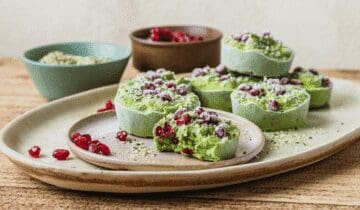
Psyllium husk can also be used to make jams or jellies. It can be shaken together with fruit juice, such as cranberry or cherry juice, and sets to form a jelly in less than 10 minutes. It can also be blended with fresh fruits like strawberry and lime to make a type of jam.
You can also add a teaspoon of psyllium husk powder to around 300 millilitres of water to gently increase the fibre in your diet. Increasing fibre too rapidly can increase bloating and discomfort, so it’s always best to go low and slow when increasing fibre in the diet, and to make sure you’re drinking enough water.

Who is Dominique Ludwig?
Dominique Ludwig is one of the UK’s leading nutritionists, with over 20 years of clinical experience. She is a King’s College London–qualified nutritionist, Registered Nutritional Therapy Practitioner (CNHC), and a Fellow of the British Association for Nutrition and Lifestyle Medicine (BANT).
Dominique’s no-nonsense, science-backed approach, combined with her calm authority and delicious recipes, has built a fast-growing online community of over 700,000 followers, alongside thousands of participants in her online health and nutrition programmes.
When not writing about the benefits of psyllium husk and fibre, she is a trusted voice contributing to publications such as The Sunday Times, Times2, The Telegraph and SheerLuxe. She has also featured on BBC Radio and numerous podcasts. Alongside her media work, she runs a thriving clinical nutrition practice in the South Downs, where her private clients include award-winning actors and global business leaders.
Over the course of three decades, Dominique has worked with more than 4,500 people. She specialises in her signature group programmes, Renew Reset Recharge® and the Triple 30 Nutrition Plan, which have helped thousands achieve sustainable results and build long-term healthy habits. She has recently released her first book.
She was recently awarded a Fellowship with BANT, recognising her outstanding expertise, leadership, and dedication to advancing the field of nutritional therapy.
Associations:
- FBANT – Fellow of the British Association for Nutrition and Lifestyle Medicine
- CNHC – Complementary and Natural Healthcare Council
Qualifications:
- MSc Nutrition, King’s College London, with Distinction
- Dip. Nutritional Therapy, with Distinction
For more info on the benefits of psyllium husk, visit our Complete Guide to Psyllium Husk here.



 No products in the cart.