

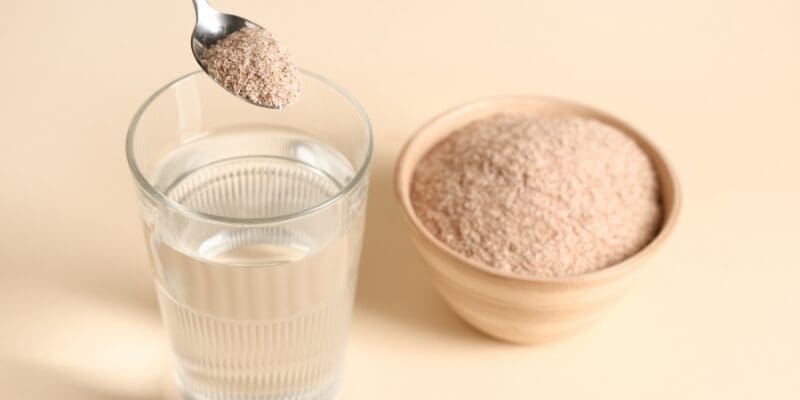
Psyllium husk is becoming an increasingly popular food in the quest for better gut health. We recently looked at the overall benefits, origins and nutritional value of psyllium in our complete guide to psyllium Husk. Below we’ll explore how to use psyllium husk and offer our top three recipes.
What Is Psyllium Husk? Quick Recap
Psyllium husk is a plant-based fibre made from the outer coating of psyllium seeds. It’s used to support everyday digestive health. It absorbs water to form a gentle gel-like fibre, slowing digestion.
Why Take Psyllium Husk?
Psyllium husk is extremely fibre-rich, so if you are experiencing fibre deficiency, it is a great go-to. Other reasons to take psyllium include irregular bowel habits, discomfort when going to the bathroom, or a feeling of prolonged hunger – even after meals.
Psyllium husk provides gentle, soluble fibre. When it forms a soft gel in the gut, it supports regular, comfortable digestion. When the foods in your diet are falling short, psyllium can help you increase your fibre intake.
How to Use Psyllium Husk
Up to 10g of psyllium can be consumed daily but we recommend to start at 5g serving and gradually increase the amount over 3 weeks. As it reaches your gut, it draws in water to form a gel-like substance; its vital to consider this when beginning psyllium. We recommend to drink 300ml (a large glass) of fluid with each 5g serving of psyllium husk powder. How to use psyllium husk varies, but keeping hydrated while doing so is a must.
Psyllium is a welcome fibre boost, its neutral taste profile allows it to work with a host of meals. As it is a soluble water absorbing fibre, you may need to add extra liquid/fluid to the dish and avoid taking the product dry.
When to Take Psyllium Husk
Psyllium is best taken before or with meals, always with a large glass of water, and at a consistent time of day. Once you find your rhythm with psyllium, taking it at the same time each day can help your body adjust to the increased fibre.
Some people opt to take it later in the evening if they experience constipation, while its ability to help regulate blood sugar makes it a great way to start the day.
If you are new to psyllium, start with a lower amount of around 3g and build to 5g per day and then slowly build this up from there. Always check with a medical professional to understand how psyllium may interact with any medications you take.
3 Unique Recipes for Psyllium Husk
Psyllium Fibre Boost Breakfast Smoothie Bowl
A straightforward smoothie bowl that’s packed with fibre. Blend the ingredients below, adding the psyllium last so it doesn’t thicken too soon. If you’d like a thinner texture, add a little more liquid until you reach your preferred consistency.
Ingredients
- 1 banana
- 150g frozen berries
- 200 ml milk or plant‑based alternative
- 5g psyllium husk
Beyond fibre, this breakfast smoothie bowl provides a range of naturally occurring nutrients that support everyday nutrition. Berries add a source of vitamin C, helping to protect cells from oxidative stress, while banana provides a good source of potassium, which supports normal muscle function and nervous system.
Milk or plant‑based alternatives add protein and calcium (where fortified), helping to support normal bone health.
Psyllium, Berry & Almond Yoghurt Bowl
A nourishing yoghurt bowl that delivers protein, fibre and vitamin C. Made with natural yoghurt, it provides a source of protein, while the live cultures in yoghurt can make it a popular choice for those focusing on gut-friendly foods.
Easy to tailor for sweeter or savoury tastes, yoghurt bowls are a simple, nutritious way to start the day. Mix and match toppings to keep things varied and help you feel satisfied.
Ingredients
- 150g natural yoghurt
- A handful of mixed berries
- 1 tbsp chopped almonds
- 5 g psyllium husk, stirred through thoroughly
- Optional: a drizzle of honey or maple syrup
No-Bake Psyllium Balls
Discover how to use psyllium husk as part of a fibre AND protein boost! This simple upgrade on the protein ball helps you blow away fibre targets. Ideal for busy days, they come together quickly and can be easily adapted to suit your tastes.
Ingredients
- 100g Oats
- 2 tbsp chia seeds
- 3 tbsp nut butter (peanut or almond)
- 2-3 tbsp honey or maple syrup
- 40 g psyllium husk (approx. 5 g per ball, depending on how many you make)
- 1 tsp vanilla extract (optional)
- 2-4 tbsp milk or plant‑based alternative (as needed)
Add the oats and chia seeds to a mixing bowl and stir to combine, then mix through the nut butter, honey or maple syrup and vanilla extract if using. Sprinkle in the psyllium husk and stir thoroughly before gradually adding the milk or plant‑based alternative, one tablespoon at a time, until the mixture comes together into a soft, workable dough. Roll the mixture into bite‑sized balls, place on a plate or in a container, and chill in the fridge for around 30 minutes to firm up before enjoying or storing chilled.
Psyllium husk absorbs moisture and helps bind the ingredients naturally without baking, while contributing gentle, soluble fibre. Oats provide slow‑release carbohydrates and naturally occurring plant protein, while chia seeds add extra fibre and texture. Adjust the nut butter and sweetener to suit your taste.

 No products in the cart.