

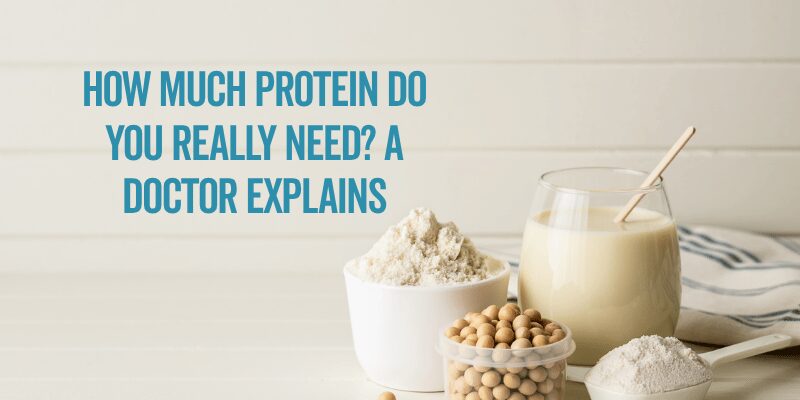
Protein is absolutely everywhere at the moment, isn’t it? High-protein yoghurt, high-protein cereal, protein bars, protein drinks. Protein added to foods you didn’t even realise needed more protein. If you believed some of the marketing, you’d think we were wandering around Britain in the grip of a national protein deficiency.
We’re not.
In fact, most adults in the UK are already getting enough protein. On average, both men and women consume more than the basic recommended amount. But that doesn’t mean protein doesn’t matter.
Why do we think we’re not getting enough protein?

I think we’ve somehow managed to have two conversations about protein at once. One tells us we’re all desperately deficient and need enormous quantities of it. The other says, “Well, most people get enough, so don’t worry about it.” The truth, as usual, is a bit more nuanced.
Protein isn’t just for gym-goers trying to build enormous biceps. Every cell in your body contains protein. We need it to make and repair tissues, and it’s particularly important for maintaining muscle. And muscle is where things get really interesting. Your muscles do far more than move you around I’ve become slightly obsessed with the emerging science around muscle because we’re discovering that it isn’t just scaffolding that keeps us upright.
Muscle is metabolically active tissue. And when you actually use it, particularly through exercise, your muscles release signalling molecules called myokines. Scientists are investigating how these signals communicate with other parts of the body, including our metabolism, cardiovascular system and even our brain. The muscle-brain connection is a fascinating area of research, although there’s still plenty we don’t understand.
That’s why I think we need to stop thinking about maintaining muscle purely in terms of looking toned, this is about healthy ageing. Eating mountains of protein won’t magically give you all those benefits. Protein provides the building blocks for muscle, but you need to use your muscles too. Think protein plus resistance exercise, rather than protein instead of exercise.
Are women getting enough protein?
Women, we need to talk about menopause and muscle, this is something I don’t think we discuss nearly enough. We talk about hot flushes, brain fog, periods, sleep and mood, all incredibly important, but menopause is also a time when women need to think about maintaining their muscles.
Research suggests lean or muscle mass can decline across the menopausal transition, although scientists are still teasing apart how much is directly due to menopause, changing hormones, ageing and lifestyle. There’s also evidence that the muscle response to things like protein and resistance exercise may change as women get older.

And that’s why I’m much more interested in protecting muscle than telling women they need to become thinner.
Strength matters. Muscle matters. Remaining mobile and independent as we get older matters. So yes, think about protein, but pick up some weights as well!
What does Linwoods Protein Boost do?
I’m a vegetarian, so I’m always conscious of getting a good variety of plant proteins into my diet, but I also don’t want food to become a mathematical exercise. I don’t want to spend my life weighing meals and calculating macros, food should still be food. That’s why I like simple additions to things I’m already eating.
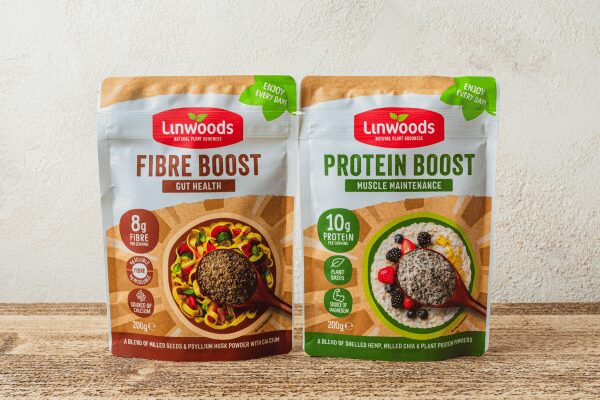
Linwoods Protein Boost combines shelled hemp, milled chia and plant protein powders and provides 10g of plant-based protein per serving. I’ll add a couple of spoonfuls to things like porridge, yoghurt or a smoothie, particularly if I look at what I’m eating and think, actually, this meal could do with a little more protein.
And that’s how I prefer to think about protein generally. Not protein panic or protein obsession its all about protein awareness. Most of us aren’t protein deficient. More isn’t automatically better, and you don’t need to turn every meal into a protein challenge. But as we get older, and particularly for women navigating menopause and beyond, maintaining our muscle becomes increasingly important.
So eat a varied diet. Include good sources of protein. Spread them throughout your day. And please, use your muscles, because one of the most exciting areas of nutrition research isn’t simply asking how much protein we can eat, it’s understanding how what we eat, how we move, our muscles, our heart, our metabolism and even our brain may all be talking to each other. And I think we’re only just beginning to understand that conversation.
What next?
Watch Dr Amir’s interview with Linwoods Managing Director Patrick Woods on our YouTube channel; where they discuss diet, the Boost range and nutrition best practices. If you are vegetarian or vegan and want to increase protein intake, read our recent post on best sources of protein on a plant-based diet.
References from Dr Amir’s ‘Are we still not getting enough protein?’
https://psychiatryonline.org/doi/full/10.1176/appi.neuropsych.20240173
https://accscience.com/journal/JCTR/articles/online_first/9152
https://www.ahajournals.org/doi/10.1161/CIRCRESAHA.118.313777



 No products in the cart.